If you are home shopping in River Edge, one thing becomes clear fast: this is not a town with just one look. You will see classic Colonials, practical split-levels, compact Cape Cods, and newer replacement homes that reflect how the borough has changed over time. Understanding those patterns can help you narrow your search, spot the trade-offs in each style, and make a more confident decision. Let’s dive in.
Why River Edge Has Mixed Home Styles
River Edge is a compact Bergen County borough with a 2025 population estimate of 12,159 and a land area of just 1.83 square miles. It also has a 75.9% owner-occupied housing rate and a median owner-occupied home value of $637,500 based on 2019 to 2023 ACS data. In simple terms, this is a mature, mostly owner-occupied housing market where homes tend to reflect many decades of development rather than one single building boom.
The borough’s housing story unfolded in waves. Local history notes early lot sales above the train depot in 1905, a still-rural landscape as late as 1938, and major suburban subdivision after World War II. River Edge’s more recent housing plans also show that much of the existing housing stock was built from the 1950s through 1970, which helps explain why several traditional suburban styles still define the local streetscape today.
That architectural identity matters here. River Edge has an active Historic Preservation Commission, and its stated purpose includes fostering civic pride in the borough’s history and architecture. For you as a buyer or seller, that means home style is not just visual. It is part of how people understand River Edge as a place.
Cape Cod Homes In River Edge
What a Cape Cod usually looks like
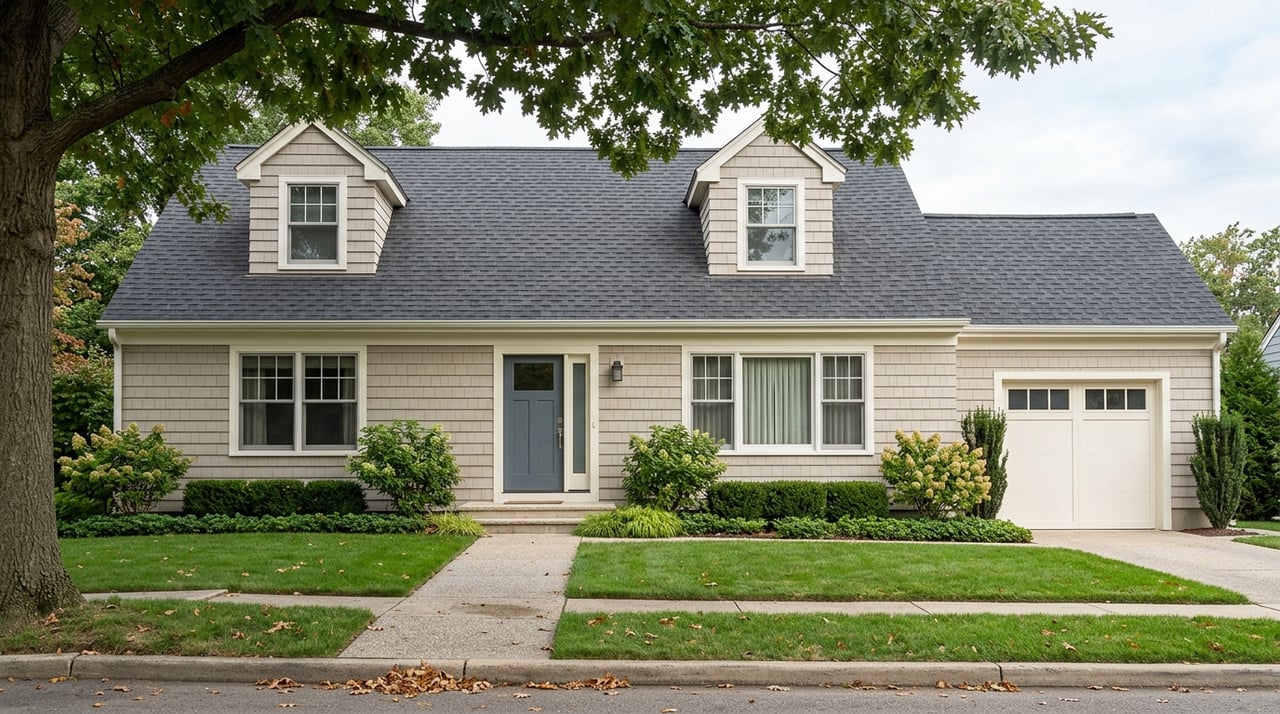
Cape Cod houses are typically one-and-a-half stories with a simple gable roof, a symmetrical front, and a centered entrance. Dormers are also common. The National Park Service describes them as a Colonial Revival offshoot that became especially common from the 1930s through the 1950s.
In River Edge, that style fits naturally with the borough’s standard single-family lot pattern. The R-1, R-2, and R-3 districts all require 7,500 square feet of lot area and 75 feet of frontage, with defined setbacks on all sides. A compact, efficient home footprint works well in that framework, which helps explain why Cape Cod forms feel at home here.
Why buyers still like them
Cape Cods often appeal to buyers who want a manageable house with straightforward circulation and a classic suburban feel. That can make them attractive for first-time buyers, downsizers, or anyone who prefers a smaller-scale home. In a borough where lot sizes and setbacks create a consistent detached-home pattern, a well-kept Cape can feel both practical and timeless.
For sellers, this style often has broad visual appeal because it is familiar and easy to understand. Buyers can usually picture how they would live in it. That matters in a market where emotional connection and layout clarity both influence demand.
Colonial And Colonial Revival Homes
What defines the style
Colonial Revival homes draw from older Georgian and Federal design traditions. The National Park Service notes features such as symmetry, prominent front entries, pilasters or columns, and sidelights or fanlights. In suburban settings, it became one of the most enduring residential styles in the country.
In River Edge, the word “colonial” often functions as a broad local category rather than a strict architectural label. It may refer to an older colonial, a Colonial Revival, or a later suburban version of the same general look. Given the borough’s growth pattern, that flexible use makes sense.
Why the style stays popular
Colonials usually appeal to buyers who want a traditional layout with more separation between living areas and bedrooms. The two-story form often reads as balanced, formal, and familiar without feeling overly ornate. If you like a classic front elevation and a more defined room-by-room layout, this is often the style that checks those boxes.
In River Edge, these homes also fit the borough’s long suburban history. Because development accelerated in the mid-20th century, the colonial form became part of the area’s established residential identity. That can make it a strong match for buyers who want a house that feels rooted in the local character.
Split-Level Homes In River Edge
How split-level layouts work
A split-level is a variation of the ranch style where one section of the house sits about halfway between the floor and ceiling of another section. According to National Park Service materials, the main or lower level often contains public rooms such as the living room, dining room, and kitchen, while the upper level contains bedrooms and bathrooms. In many examples, part of the upper level is built over a garage at driveway level.
This style makes sense in River Edge because much of the borough’s housing stock dates to the post-World War II era, when split-level homes were especially common. Even if the exact design details vary from house to house, the overall layout logic remains familiar.
Why some buyers prefer them
Split-levels often work well for buyers who want distinct living zones and practical day-to-day separation. Bedrooms can feel set apart from common areas, while the staggered layout creates a different rhythm than a standard two-story home. For busy households, that separation can feel useful and flexible.
That said, split-level living is also a matter of preference. Some buyers love the clear division of space, while others prefer a simpler floor plan. In River Edge, knowing that split-levels are part of the borough’s postwar housing story can help you see them as a key local option rather than an outlier.
Newer Construction In River Edge
What “newer” usually means here
If you hear “new construction” in River Edge, it usually does not mean a large brand-new subdivision. The borough’s 2026 amended housing plan says River Edge is fully developed and lacks vacant developable land. It also reports 86 residential building permits for new construction from 2014 through 2023, including 68 for multifamily development, along with 34 residential demolition permits.
That pattern tells you something important. In River Edge, newer homes are more often replacement homes, infill projects, or townhouse development near the train station rather than homes in a newly opened tract community. The borough’s 2025 housing plan also notes newer townhouse developments near the River Edge train station.
What buyers should expect
For buyers, newer construction can offer a home that is newer than much of the surrounding housing stock and may need less immediate renovation work. But because River Edge is largely built out, the setting is still shaped by an established borough, not a blank-slate development. That can be appealing if you want a newer home while still buying into a mature neighborhood pattern.
For sellers of older homes, this also helps frame competition. Your home is not only competing against resale homes of a similar age. In some cases, it may also be compared with replacement homes or townhouses that offer a different lifestyle and maintenance profile.
Lot Size And Site Conditions Matter
Standard lot patterns shape the feel
River Edge zoning helps explain why the borough often feels like a detached-home suburb with clear yards and setbacks. In the standard single-family districts, minimum lot area is 7,500 square feet, minimum frontage is 75 feet, front yards are 30 feet, side yards are 7.5 feet, rear yards are 25 feet, and building and lot coverage are limited. Those rules create a fairly consistent suburban framework.
That structure affects more than curb appeal. It shapes how homes sit on the lot, how much side-yard separation you may see, and how additions or replacement homes fit into the street. If you are comparing two homes with similar square footage, lot layout can still change how the property feels in daily use.
Flooding is part of the site picture
The borough’s housing plan notes that River Edge fronts the tidal Hackensack River on its eastern boundary and that flooding remains a challenge in several parts of town. That means the site can matter just as much as the architecture. A home style you love may function differently depending on drainage, elevation, and its location within town.
This is especially important in a built-out borough where choices are often about trade-offs rather than perfect matches. When you evaluate a property, it helps to look beyond the facade and think about the lot, the setting, and how the home works day to day.
How To Choose The Right Style For You
Focus on how you want to live
The right home style in River Edge often comes down to your daily routine and comfort with upkeep. If you want a compact layout, a Cape Cod may feel efficient and approachable. If you want a more traditional room-by-room setup, a colonial may feel like the better fit.
If you prefer separated living zones, a split-level may stand out. If you want something newer, your search may lean toward replacement homes, infill projects, or townhouses near the train station. In River Edge, style is rarely just about appearance. It is also about layout, lot fit, and the age of the housing stock around you.
Think locally, not just generally
A smart home search here means looking at architecture through the lens of River Edge itself. This borough is fully developed, mostly owner-occupied, and shaped by many decades of building. That gives it character, but it also means each home should be judged in context.
That is where local guidance can make a real difference. When you understand how style, lot standards, redevelopment patterns, and site conditions work together, you can compare homes more clearly and avoid surprises later.
Whether you are buying your first home, moving within Bergen County, or planning a downsizing move, it helps to have a guide who can translate River Edge’s housing patterns into practical advice. If you want help evaluating home styles, lot fit, and what makes sense for your goals, connect with Miriam Yu.
FAQs
What home styles are common in River Edge, NJ?
- River Edge commonly features Cape Cods, Colonials or Colonial Revival homes, split-levels, and newer replacement or infill homes.
What does new construction usually mean in River Edge, NJ?
- In River Edge, new construction usually means a replacement home, infill project, or townhouse development rather than a large new subdivision, because the borough is fully developed.
Why are split-level homes common in River Edge, NJ?
- Split-level homes fit River Edge’s post-World War II housing growth, when that layout was widely built in suburban communities.
How do lot sizes affect homes in River Edge, NJ?
- Standard single-family zoning in River Edge includes 7,500-square-foot minimum lots, 75 feet of frontage, and defined setbacks, which shape how detached homes sit on the property.
What should buyers know about River Edge, NJ site conditions?
- Buyers should know that River Edge borders the tidal Hackensack River and that flooding remains a challenge in several parts of the borough, so the lot and setting matter alongside the house style.